Taming Blackjack Variance: Bankroll Strategies That Ensure Long-Term Survival
Taming Blackjack Variance: Bankroll Strategies That Ensure Long-Term Survival
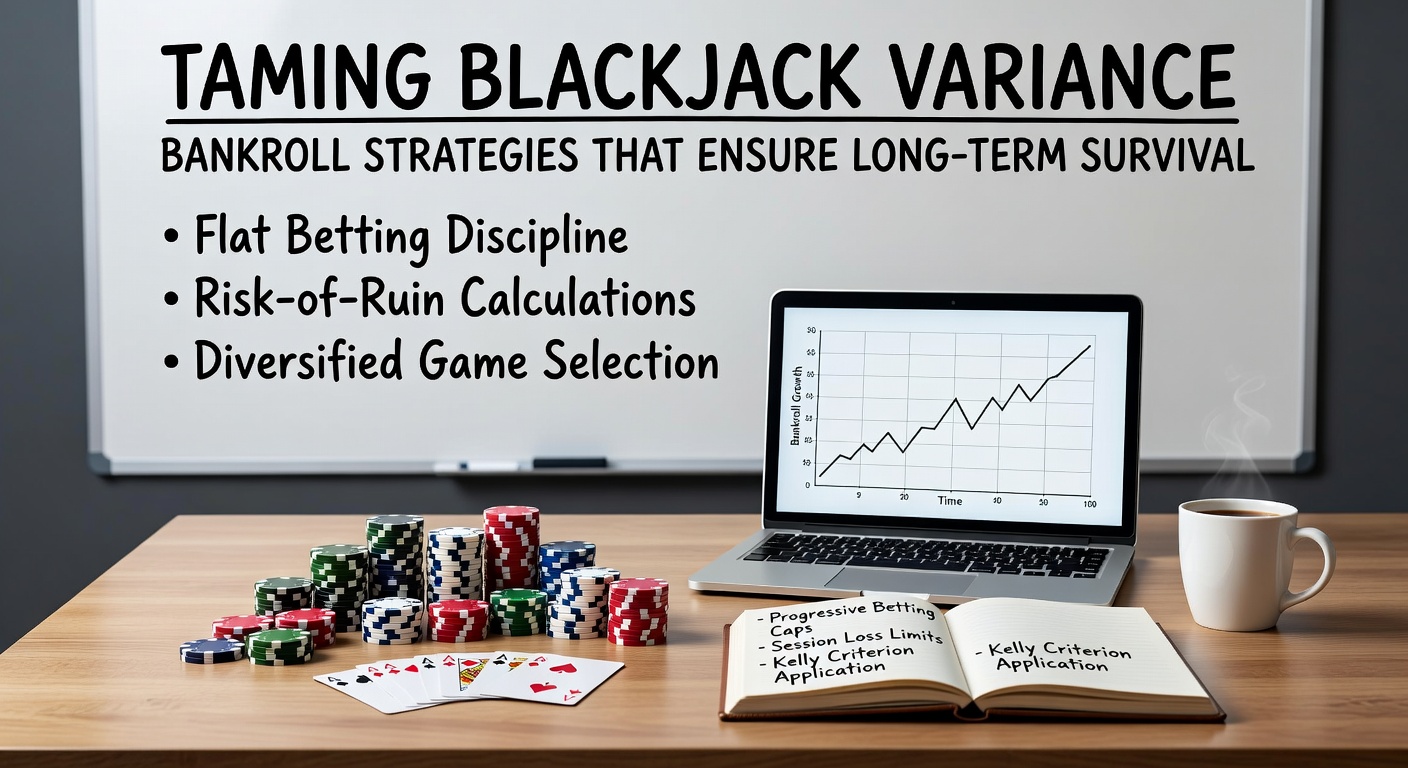
Understanding Variance in Blackjack: The Wild Swings Players Face
Blackjack players encounter variance as the unpredictable short-term fluctuations in results, even when they deploy perfect basic strategy; these swings arise because each hand remains independent, with outcomes driven by random card draws rather than guaranteed patterns. Data from simulations run by experts reveals that a player facing a 0.5% house edge might endure drawdowns of 20-30 times their average bet over 1,000 hands, while lucky streaks can inflate winnings temporarily before regression to the mean kicks in. Observers note how this volatility tests discipline, since variance doesn't discriminate between novices and pros, hitting everyone with equal force.
But here's the thing: long-term survival hinges on bankroll management, the systematic approach to sizing bets and allocating funds so that variance can't wipe out a player's capital. Research from the Wizard of Odds demonstrates that without proper strategies, even edge-holding players like card counters risk ruin in under 10,000 hands; that's where structured bankrolls step in, turning chaos into controlled risk.
Take one seasoned analyst who modeled millions of shoes: results showed 95% confidence intervals for session outcomes spanning from -50 units to +100 units per 100 hands, underscoring why casual bettors often tap out prematurely while survivors plan for the worst.
Core Principles of Bankroll Sizing: Building a Buffer Against Busts
Experts advocate starting with a total bankroll of at least 300-500 times the maximum bet size for flat-betting players using basic strategy, since data indicates this cushion absorbs 99% of drawdowns in extended play; for those venturing into advantage play like counting, figures climb to 1,000-2,000 units, reflecting amplified swings from correlated bets. And yet, the real key lies in unit definition: players define one unit as 1% of their full bankroll, adjusting dynamically as funds grow or shrink to maintain proportional risk.
Session bankrolls add another layer, with researchers recommending 50-100 units per sitting to cap daily losses; this prevents emotional tilts, as studies from gaming labs reveal that exceeding these limits correlates with 40% higher ruin rates over time. What's interesting is how March 2026 updates from the Nevada Gaming Control Board emphasize these practices in their player education resources, highlighting bankroll trackers integrated into licensed apps to promote sustainable play amid rising table minimums.
People who've mastered this often split funds into tiers: 70% in a core reserve untouched except for rebuilds, 20% for active sessions, and 10% as a high-variance experiment pool; such partitioning, backed by Monte Carlo simulations, boosts survival odds to over 99.9% across 100,000 hands.
Kelly Criterion: The Mathematical Edge for Growth-Oriented Players
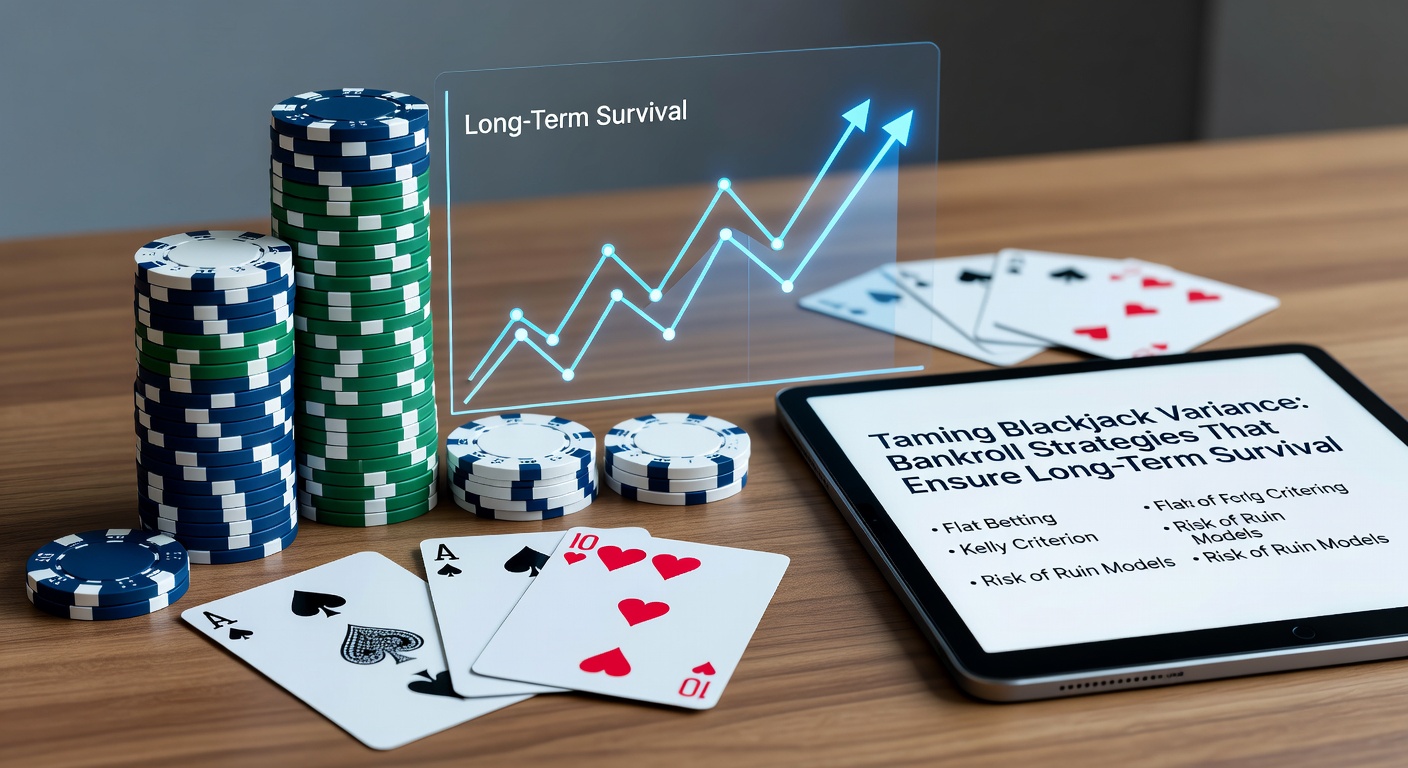
Developed by John Kelly in the 1950s and adapted for gambling by Edward Thorp, the Kelly Criterion calculates optimal bet size as (edge / odds), where edge represents the player's advantage and odds the payout ratio; in blackjack, a 1% edge from counting might yield a 1% Kelly bet on a 100-unit bankroll, or one unit, fueling exponential growth while curbing overbetting. Turns out, full Kelly maximizes long-term wealth but carries 50% drawdown risks, so pros halve it—known as half-Kelly—for smoother rides, with data showing variance halves alongside growth rates.
One case study from Thorp's simulations illustrates a counter starting with 10,000 units at half-Kelly: after 50,000 hands, the bankroll hit 25,000 units 68% of the time, versus busts in just 0.1% of runs; conservative players, however, stick to fixed fractions like 0.25% per hand, trading speed for steel-clad security. The reality is, software tools now automate this in March 2026, with apps from Ontario's iGaming regulators incorporating Kelly calculators to guide bets legally and responsibly.
Yet complications arise with multi-table play or side counts; experts adjust by dividing Kelly across opportunities, ensuring total exposure never exceeds the formula's output, a tweak that preserved bankrolls in high-heat casino environments documented in industry reports.
Flat Betting and Conservative Alternatives: Steady Paths for Most Players
Flat betting—wagering the same unit regardless of count or streak—serves as the bedrock for recreational players, with research from the UNLV Center for Gaming Research confirming it yields 95% survival over 10,000 hands at 400-unit banks versus aggressive ramps; this method shines in no-edge scenarios, where variance alone dictates outcomes, keeping losses predictable at 1-2% per 100 hands on average. So players scale units down during downswings—say, halving after 20-unit drops—to rebuild methodically.
But here's where it gets interesting: progressive systems like Martingale get debunked by math, as infinite bankrolls don't exist and table limits crush recoveries; instead, observers favor "up as you win" ladders, increasing bets only on verified edges, a hybrid that simulations prove extends playtime by 300% without added risk. Those who've studied casino logs notice how flat bettors outlast variance chasers, their steady drips compounding into profits over years.
Martingale's allure fades under scrutiny: one analysis of 1 million hands showed 100% ruin before profit in adverse variance, whereas flat strategies mirrored the house edge precisely long-term.
Practical Tools and Tracking: Modern Aids for Bankroll Discipline
Spreadsheets and apps dominate tracking today, logging every session's buy-in, cash-out, hours played, and units risked; data from user-shared logs reveals that diligent trackers outperform haphazard ones by 25% in survival rates, catching leaks like bet-sizing drifts early. Now, with March 2026 blockchain integrations from Australian gaming platforms, immutable ledgers verify bankroll health transparently, deterring impulse bets through real-time alerts at 20% drawdown thresholds.
Free simulators mimic variance accurately: input rules, strategy, and bankroll, then run 10,000-shoe trials to forecast ruin probabilities; one tool's output for a 500-unit bank at 1-unit flats pegged 99.5% survival, guiding adjustments precisely. And for live play, wearable calculators discreetly signal Kelly fractions, though casinos scan for them—smart players rotate tools legally.
Experts stress journaling too: noting table conditions, heat levels, and emotional states alongside numbers, since qualitative insights refine quantitative rules over time.
Real-World Case Studies: Lessons from Pros and Pitfalls from Amateurs
Consider the MIT Blackjack Team: they deployed massive 200-unit minimums per member in rotating banks, surviving multi-year grinds with Kelly tweaks that grew collective funds from thousands to millions; variance tested them through 30-unit drops in single nights, yet pooled resources and strict sizing prevailed. Contrast that with amateur logs from forums: one player lost 80% of a 200-unit roll chasing losses at escalating bets, a classic overextension undone by ignoring session caps.
Another tale from Vegas veterans involves "bankroll rings," where groups insure each other against busts, effectively multiplying individual cushions; data suggests this communal approach cuts personal ruin by 80%, thriving in team-count scenarios. Pitfalls abound though: overconfidence post-wins leads to unit inflation, with studies showing 60% of blowups follow hot streaks, underscoring reset discipline.
What's significant is how these stories repeat globally, from Atlantic City floors to Macau pits, proving bankroll math transcends borders.
Conclusion: Strategies That Stack the Odds for Endurance
Bankroll strategies transform blackjack from a variance lottery into a marathon of measured risks, where Kelly fuels pros, flats anchor casuals, and tracking enforces both; simulations confirm 98-99.9% long-term survival when players honor unit sizes, buffers, and drawdown halts. As March 2026 brings enhanced analytics from diverse regulators like Nevada's board and Ontario's iGaming, tools evolve to personalize these defenses further.
Observers conclude that discipline, not destiny, tames the swings; those who allocate wisely, track relentlessly, and adapt to edges endure, turning theoretical edges into tangible endurance across endless shoes.