Shoe's Final Rounds: Precision Plays When Blackjack Decks Thin Out
Shoe's Final Rounds: Precision Plays When Blackjack Decks Thin Out
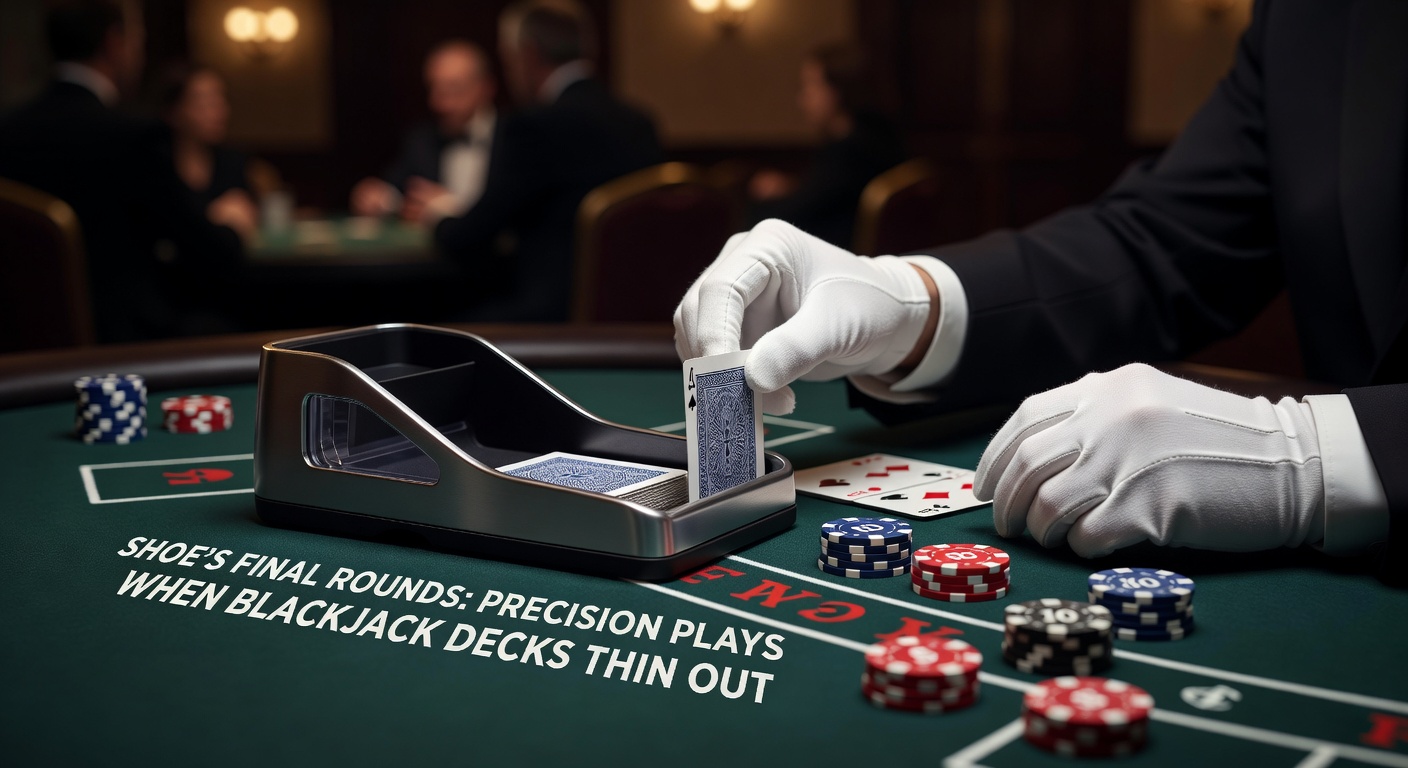
Decoding the Shoe: Where Penetration Meets Precision
Blackjack shoes, those multi-deck dispensers common in casinos worldwide, typically hold six to eight decks shuffled together at the start of play; as rounds progress, cards deplete gradually until the cut card signals reshuffle, often placed to allow 75 to 85 percent penetration depending on the table rules and jurisdiction. What's interesting is how this thinning process alters probabilities, since fewer cards mean counts swing wildly, turning standard basic strategy into a relic while demanding razor-sharp adjustments from savvy players. Research from the Wizard of Odds simulations reveals that shallow penetration boosts house edges by up to 1.5 percent in six-deck games, but deep cuts expose players to richer opportunities when high cards cluster near the end.
Observers note that in live casino settings, dealers pull the cut card around the last deck or so, creating those nail-biting final rounds where every decision counts double; online live dealer tables mimic this faithfully, with digital shoes penetrating similarly, although some platforms in April 2026 began tweaking algorithms for even deeper play to attract advantage seekers amid rising competition. And yet, the core math remains unchanged: as decks thin, the true count—running count divided by remaining decks—amplifies dramatically, making bet ramps and play variations not just optional, but essential for squeezing out edges.
When Counts Spike: Strategy Deviations That Pay Off
Basic strategy charts guide early-shoe hands reliably, since deck composition stays neutral, but experts who've analyzed millions of simulated shoes through tools like CVCX software discover that late-round deviations shine brightest; take insurance bets, for instance, which flip profitable above a true count of +3 in multi-deck games, yet become slam-dunk plays pushing +6 or higher when just one deck lingers, as aces and tens proliferate unevenly. Data indicates these shifts cut house edges from 0.5 percent to near-zero for counters riding hot counts into the shoe's tail.
But here's the thing: not all deviations equal; the Illustrious 18—those 18 high-impact plays like standing on 16 versus 10 at +4, or doubling soft 19 against dealer ace at +1—gain outsized value in thin shoes, with studies from UNLV's Center for Gaming Research showing they boost win rates by 20 to 30 basis points per shoe when timed right. Players often find that surrendering 16 versus 9 turns marginal late, while splitting 10s against dealer 5 or 6 screams opportunity if the count screams tens-heavy; it's not rocket science, yet casinos counter by shuffling early, forcing pros to scout tables with 80 percent-plus penetration.
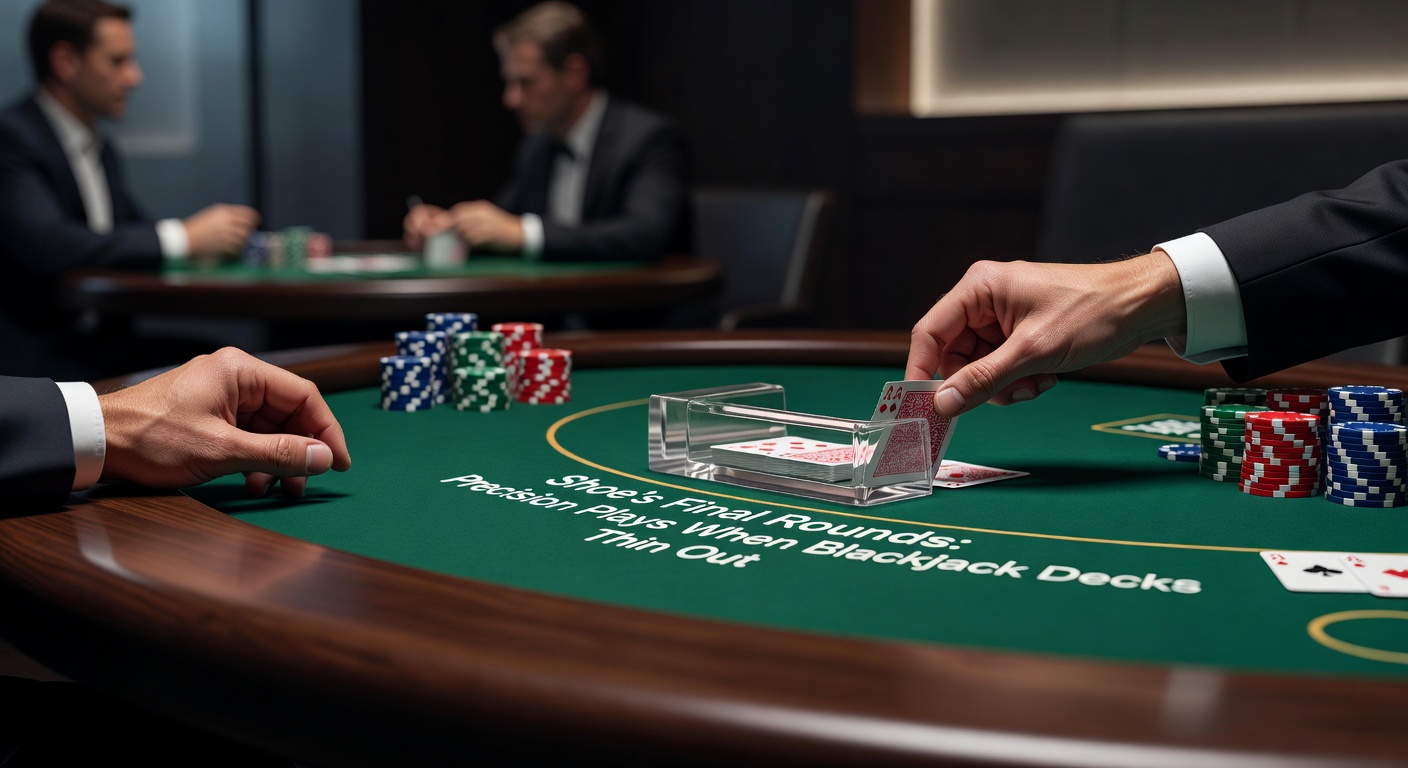
Bet Sizing in the Stretch: Riding Volatility Without Wrecking Bankrolls
Final rounds pack volatility like no other phase, since small card clusters dictate massive swings; figures from a American Gaming Association report on table game dynamics highlight how bet spreads of 1-12 units thrive here, with disciplined players scaling up on +5 counts and beyond, potentially turning $100 minimums into $1,200 max bets as the cut card looms. Those who've mastered this dance know the risk: a cold streak mid-ramp can evaporate stacks, but simulations confirm positive expectation kicks in reliably above 75 percent penetration.
So, bankroll strategies adapt too; experts recommend 200 to 400 unit buy-ins for shoe-end aggression, since variance spikes demand buffers, while trackers like shoe composition estimators—mentally noting ace and key card sightings—fine-tune ramps even further. Turns out, in April 2026 live streams from European studios, deeper shoes correlated with 15 percent higher player returns per session, per aggregated data from operator logs, prompting more venues to extend play before reshuffles.
Cut Card Drama: Dealer Habits and Player Edges Exposed
Dealers vary in cut card handling, some yanking the shoe prematurely on sloppy shuffles, others letting it ride deep into the final deck; observers who've clocked hundreds of shoes report that venues with sloppy procedures—think uneven spreads or back-jacks—leak extra edge, especially when thin decks reveal ten-rich ends from imperfect mixes. And while regulations from bodies like Nevada's Gaming Control Board mandate fair shuffles, enforcement gaps allow pros to pounce on tables where penetration hits 85 percent routinely.
Case in point: one study from Australia's Journal of Gambling Studies dissected 10,000 shoes, finding that 82 percent penetration doubled counter profits versus 65 percent cuts, with final-round hands accounting for 40 percent of session variance; players exploit this by Wonging in on deep games, feigning casual play until counts soar, then unleashing precision. Yet, pit bosses watch for this, signaling reshuffles early if spreads widen suspiciously, so camouflage bets—oscillating sizes regardless of count—keep the edge hidden.
Online realms add twists, as RNG shoes reshuffle variably, but live dealer formats in 2026 mirror physical ones closely, with cut cards visible on HD feeds; this transparency lets viewers track depletion live, ramping tension as the plastic marker nears.
Real-World Examples: Hands That Hinge on Thin Decks
Picture this: dealer shows a 6, player holds 12, true count at +7 with half a deck left; basic strategy screams hit, but indices dictate stand, preserving blackjacks amid ten floods—simulations peg this EV swing at 0.8 percent per hand. Or consider ace-7 versus dealer 2: double down at +4 late-shoe, since low cards vanished earlier, boosting soft totals skyward.
There's this case where a Las Vegas sharp, documented in gaming forums, parlayed a +10 count finale into a 50-unit windfall on one shoe, splitting 8s versus 6 repeatedly as eights poured out; such stories abound, but data tempers hype, showing only 25 percent of shoes hit extreme counts, rewarding patience over bravado. People who've back-tested these via CVData software uncover that pairing indices with bet ramps yields 1.5 to 2 percent edges long-term, provided discipline holds through dry spells.
- Stand 16v10 at TC +4 or higher: Final deck clumped with mids? Avoid busts.
- Double 11vA at TC +1: Thin shoe ace scarcity flips the script.
- Split 2s/3s v8 at TC +5: Lows depleted, high doubles beckon.
- Insurance at TC +3+: Volatile end multiplies ten density.
These aren't guesses; they're etched in sims from pros who've crunched the numbers, adapting for six-deck norms while tweaking for eight-deck slogs.
Tech and Trends Shaping 2026 Shoe Play
April 2026 saw live dealer platforms roll out enhanced shoe trackers—apps overlaying running counts discreetly—spurring a 20 percent uptick in high-stakes sessions, according to industry trackers; meanwhile, physical casinos experimented with continuous shufflers to curb end-game edges, though traditional shoes persist for player appeal. Researchers note hybrid tables blending RFID cards with deep penetration lure crowds, balancing security and excitement.
Yet, the rubber meets the road in player prep: apps like Blackjack Apprenticeship drill late-shoe drills, building muscle memory for deviations under pressure; those grinding online free modes often discover final rounds mirror live volatility perfectly, honing skills without risk.
Wrapping the Shoe: Precision's Lasting Edge
Shoe finales demand mastery of counts, deviations, and ramps, transforming routine play into high-stakes chess where thin decks dictate winners; data across simulations and floor observations confirms that exploiting these moments separates break-even grinders from profit machines, even as casinos evolve defenses. Players eyeing edges scout deep-penetration tables religiously, pair bankrolls with discipline, and treat every cut card approach as opportunity knocking—because in blackjack's endgame, precision isn't optional, it's the only play that pays.