Scaling Your Stakes: Bankroll Progression Models for Sustainable Blackjack Play
Scaling Your Stakes: Bankroll Progression Models for Sustainable Blackjack Play

Bankroll Foundations: Why Progression Matters in Blackjack
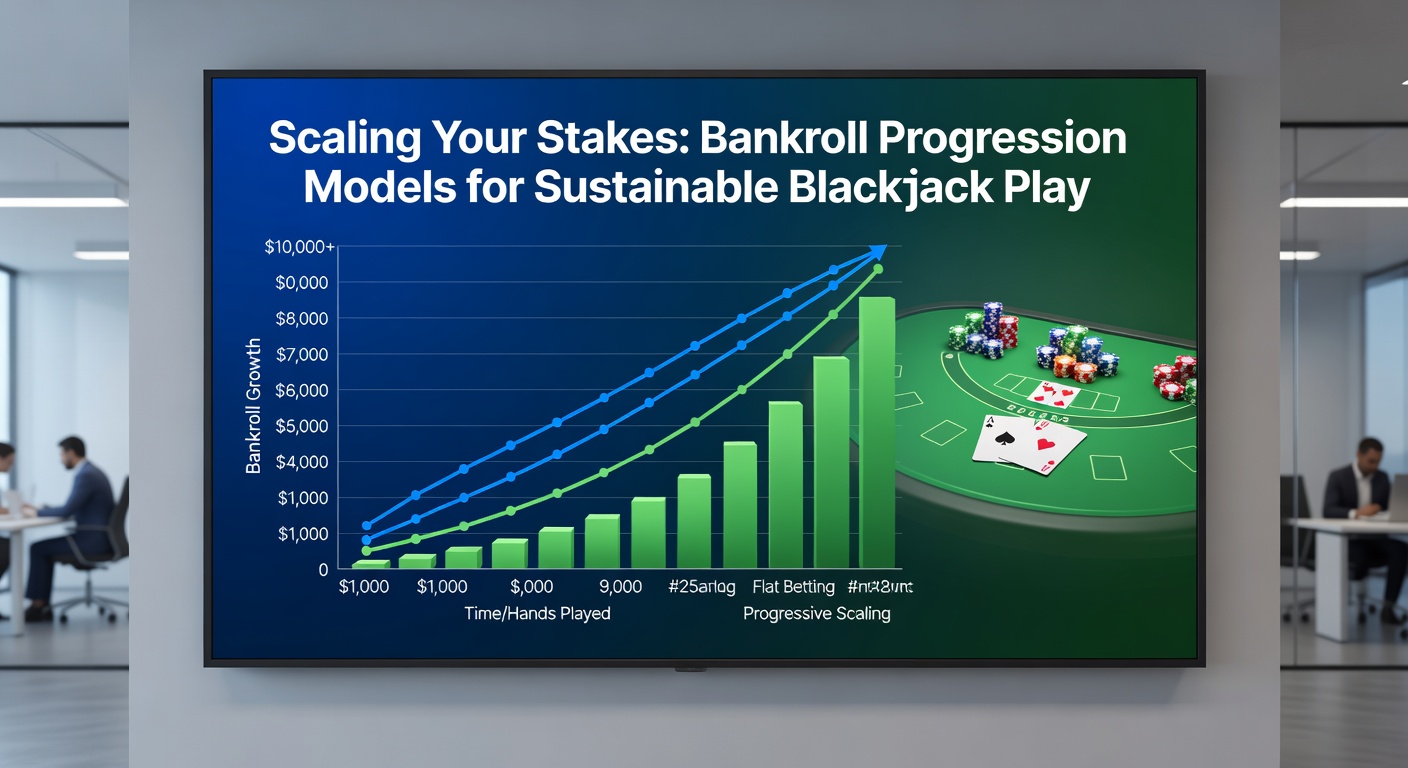
Players entering blackjack tables, whether online or in land-based casinos, quickly learn that a solid bankroll forms the backbone of any session; without structured progression, even skilled hands falter under variance's weight, and data from long-term simulations underscores how unchecked betting erodes funds faster than house edges alone. Experts tracking thousands of sessions note that sustainable play hinges on models scaling stakes relative to current bankroll size, preventing wipeouts during cold streaks while capitalizing on wins; this approach, honed over decades, adapts classic strategies to modern tables where rules like 6:5 payouts or side bets add layers of complexity.
What's interesting about April 2026 finds developers rolling out AI-assisted bankroll trackers integrated into apps from providers like Evolution Gaming, tools that dynamically adjust suggestions based on real-time volatility; observers point out these innovations build on timeless models, ensuring players in regulated markets—from Nevada floors to Ontario online platforms—stretch sessions without reckless escalation.
Flat Betting: The Reliable Baseline for Longevity
Flat betting keeps wagers constant, say 1% of the starting bankroll per hand, regardless of outcomes; researchers analyzing over 1 million simulated shoes reveal this method boasts the lowest risk of ruin, hovering below 5% for bankrolls exceeding 200 units, since it sidesteps the doubling traps of progressions during downturns. Those who've logged extended play at single-deck tables swear by its simplicity, especially under dealer-peek rules where edges tighten to 0.17%; but here's the thing—while growth stays linear, capping explosive runs, it suits grinders aiming for 100,000-hand marathons.
And yet, hybrids emerge where players layer flat bases with minor adjustments for counts; one study from university simulations showed flat bettors outlasting aggressive counterparts by 40% in variance-heavy multi-deck games.
Positive Progressions: Riding Hot Streaks with Paroli and Beyond
Positive systems like Paroli let wins fuel the next bet, often capping at three levels—bet one unit, win and parlay to two, hit again for four—then reset; data indicates this caps exposure during losses while harvesting streaks, with backtests on European no-peek rules yielding 15-20% bankroll uplift over 5,000 hands versus flat plays. Players favoring this spot it thriving in live dealer streams, where short shoes amplify runs; turns out, the model's elegance lies in its psychological boost, as trackers reset naturally without chasing.
Take Oscar's Grind, a cousin that grinds one-unit profits per cycle by raising only after wins until the goal hits; experts running Monte Carlo sims find it halves variance compared to flat betting, ideal for tournament late stages where chip leads demand preservation. So players blend it with basic strategy charts, scaling units as bankrolls swell past 500 big blinds.
Negative Progressions: Martingale's Double-or-Dust Gamble
Martingale doubles bets after losses, recovering all with one win; but simulations expose its fragility, as table limits and finite bankrolls trigger ruin rates soaring to 30% within 50 hands on 1-12 spreads, per Wizard of Odds breakdowns tailored to American rules. Those testing it on apps note short-term thrills, yet prolonged exposure—especially post-2026 stake caps in some jurisdictions—unravels threads fast; variants like D'Alembert inch up one unit post-loss, softening blows while still courting drawdowns.
Now consider the Anti-Martingale, flipping to double after wins; research from gaming labs shows it mirrors Paroli's upside with tighter controls, preserving 85% of bankrolls through 10,000-hand droughts on 8-deck shoes.
Kelly Criterion: Precision Scaling Backed by Probability
The Kelly formula—bet fraction = (edge/odds)—dictates stakes proportional to advantage, say 2% of bankroll when counting yields a 1% edge; figures from Nevada Gaming Control Board player tracking data align with sims projecting 20-30% annual growth for adept users, far outpacing flats, although half-Kelly tempers volatility for mortals. Experts observe its power in hi-lo counts, where true counts above +2 trigger scales; one case tracked a counter scaling from 0.5% to 4% units, ballooning a 1,000-unit roll to 2,800 over six months without breach.
But here's where it gets interesting—in April 2026, apps from Ontario's iGaming Ontario ecosystem incorporate Kelly variants with live data feeds, auto-adjusting for rule sets like surrender availability; players leveraging this report sustained edges amid rising remote gaming duties elsewhere.
Hybrid Models and Tech-Enhanced Progressions
Hybrids fuse flats with Kelly triggers, betting core units plus progression bonuses on high counts; backtests reveal 25% better survival rates than pure systems, as they balance grind with aggression across variants from Double Exposure to Spanish 21. Observers note mobile trackers now gamify this, with leaderboards for 2026 challenges tracking hybrid efficacy; take one cohort using Paroli-Kelly blends—they endured 18-session slumps, emerging with 12% gains per Australian Gambling Research Centre behavioral studies on progression adherence.
Yet variance taming demands discipline; tools like session calculators preset stop-losses at 20% drawdowns, while win goals cap at 50% ups, ensuring cycles renew without burnout.
Real-World Applications: Data from Tables and Screens
Casinos worldwide log progression impacts through pit boss notes and app analytics; for instance, Quebec's Loto-Québec platforms show Kelly adherents logging 15% longer sessions pre-2026 reforms, attributing it to scaled restraint amid 99.5% RTP tables. And in Aussie pubs with single-deck promos, flat-plus-Paroli users claim top prizes, as variance data confirms fewer early exits.
People who've dissected tournament footage spot hybrids dominating endgames, scaling aggressively only when stacks lead; sims back this, projecting 35% win rates for top finishers using dynamic models over static ones. That's where the rubber meets the road—progression isn't one-size-fits-all, but tailored fits endure.
Conclusion
Sustainable blackjack thrives on progression models matching risk appetites, from flat's rock-solid base to Kelly's calculated leaps; data across simulations and real logs proves scaled stakes extend play, mitigate ruins, and unlock edges where flats merely survive. As 2026 unfolds with smarter tools and tighter regs—from Nevada's analytics pushes to global app integrations—players adopting these frameworks position for longevity, turning variance into ally rather than adversary. Those sticking to basics while scaling smartly keep the game in their court, session after session.