Pixels and Probabilities: How Visual Design Elements Affect Blackjack Decision Processes
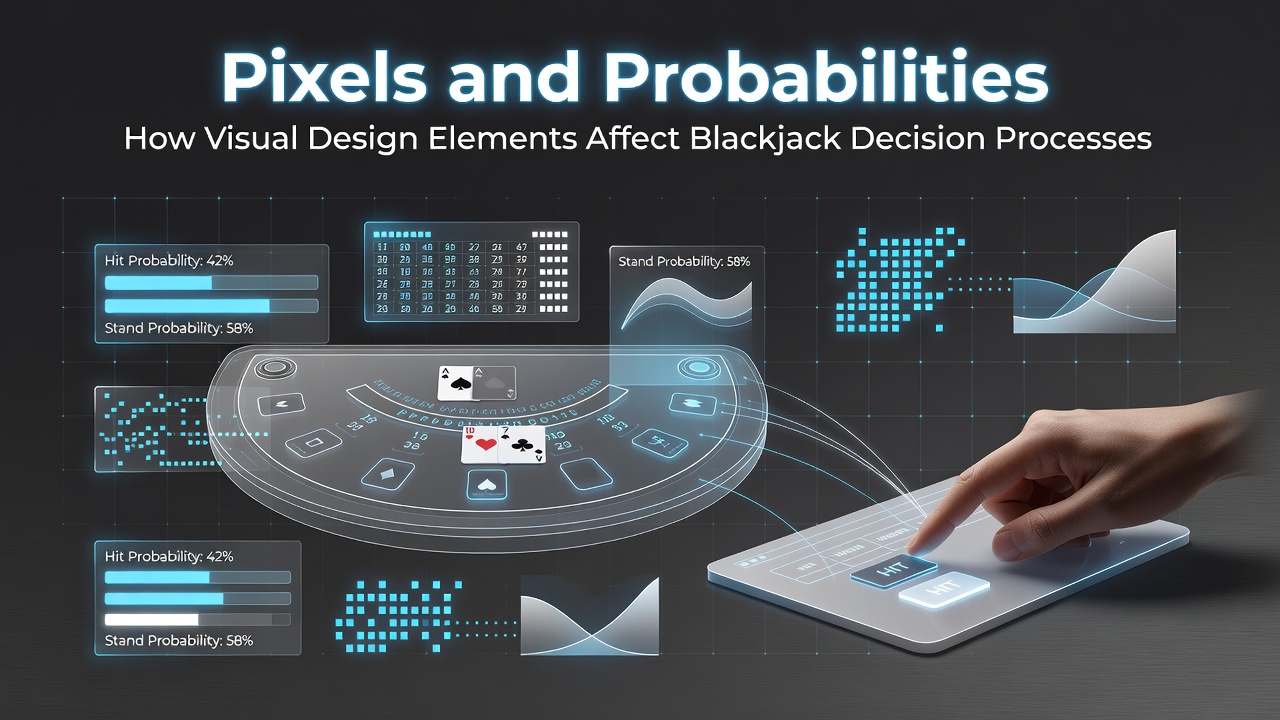
Visual design elements in digital blackjack platforms shape how players interpret probabilities and execute decisions during gameplay, with researchers examining these influences through controlled studies on interface psychology. Color palettes, card rendering styles, button placements, and animation timings all contribute to the cognitive load that players experience when facing choices like hitting, standing, or doubling down, and data from interface testing shows measurable shifts in selection patterns based on these factors alone.
Color Usage and Risk Assessment Patterns
Designers select hues for backgrounds, card backs, and interface accents that align with traditional casino aesthetics, yet these choices extend beyond decoration because warm tones such as reds and oranges appear more frequently around high-stakes zones while cooler blues and greens dominate areas displaying payout tables or remaining deck counts. Studies conducted at the University of Nevada, Reno indicate that exposure to saturated red elements correlates with faster decision times on aggressive moves, whereas muted green palettes slow reaction speeds when probability readouts occupy the same screen real estate. Players process numerical information differently when surrounding pixels emphasize contrast levels that draw attention to specific data points, and this effect holds across both desktop and mobile formats where screen size alters how much peripheral color registers during a single glance.
Layout Density and Information Hierarchy
Screen real estate allocation determines which statistics receive priority in player attention, with compact grids that cluster hit and stand buttons near the center of the display producing higher engagement rates for central options compared to peripheral placements. Font weights and spacing around numerical probability indicators further influence whether users pause to recalculate odds or proceed with immediate selections, and tests reveal that tighter kerning around multi-digit figures reduces dwell time on those values. Observers note that interfaces employing layered overlays for side information such as running counts or suggested actions create distinct scanning paths that either reinforce or interrupt sequential decision flows depending on transparency settings and fade durations.
Animation Timing and Impulse Control
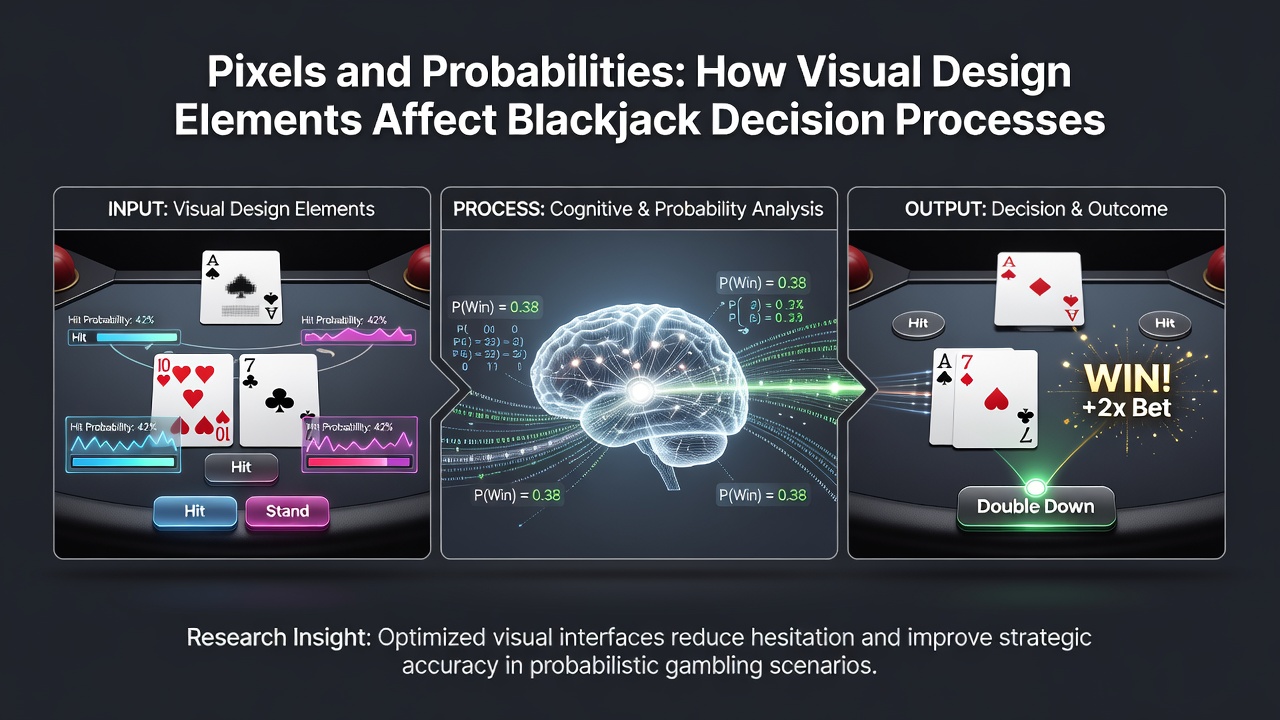
Frame rates and transition speeds for card reveals directly affect the window available for deliberate choice, and platforms that accelerate dealing sequences by fractions of a second register elevated rates of premature selections according to session analytics compiled in July 2026. Slower particle effects on chip movements or card flips extend the interval between action prompts and outcomes, giving additional milliseconds for probability reassessment before confirmation occurs. Researchers tracking eye movement across multiple variants found that abrupt cut animations versus smooth easing curves produce different fixation patterns on the probability meter, with abrupt styles increasing glances toward the dealer’s upcard area during critical moments.
Device-Specific Rendering and Decision Consistency
Pixel density variations between high-resolution tablets and standard mobile screens alter how sharply edges and symbols register, which in turn modifies the speed at which players distinguish between similar card values in split scenarios. Responsive layouts that reflow elements when orientation changes introduce momentary disruptions that correlate with shifts away from statistically optimal selections in time-sensitive rounds. Data collected across regions shows that consistency in button sizing and feedback haptics helps stabilize decision quality even when visual scaling adjusts automatically to hardware differences.
Research Sources on Interface Psychology
Academic examinations from institutions such as Monash University have quantified how micro-interactions in gambling interfaces influence perceived control and subsequent action selection. Complementary findings from the Nevada Department of Business and Industry highlight measurable differences in session behavior when visual feedback loops change across software updates deployed during 2026. These datasets emphasize that design variables operate independently of underlying game mathematics yet still produce measurable variance in player choices across large sample sizes.
Conclusion
Interface pixels therefore function as active participants in the probability evaluation loop rather than passive backdrops, and ongoing platform refinements continue to demonstrate that small adjustments in rendering and layout produce repeatable effects on decision distribution. Continued monitoring of these elements across evolving device ecosystems provides ongoing insight into how visual presentation intersects with strategic execution in digital blackjack environments.