Online Blackjack's Multi-Hand Feature Calls for Refined Strategies and Bigger Bankrolls
Online Blackjack's Multi-Hand Feature Calls for Refined Strategies and Bigger Bankrolls

Online blackjack tables buzz with action these days, especially where the multi-hand feature shines; players can wager on two, three, or even seven hands at once, turning a single round into a high-stakes symphony of decisions, and while this ramps up excitement and potential payouts, data from casino analytics platforms reveals it demands sharper strategies alongside substantially larger bankrolls to weather the increased variance.
Unpacking the Multi-Hand Mechanics in Online Blackjack
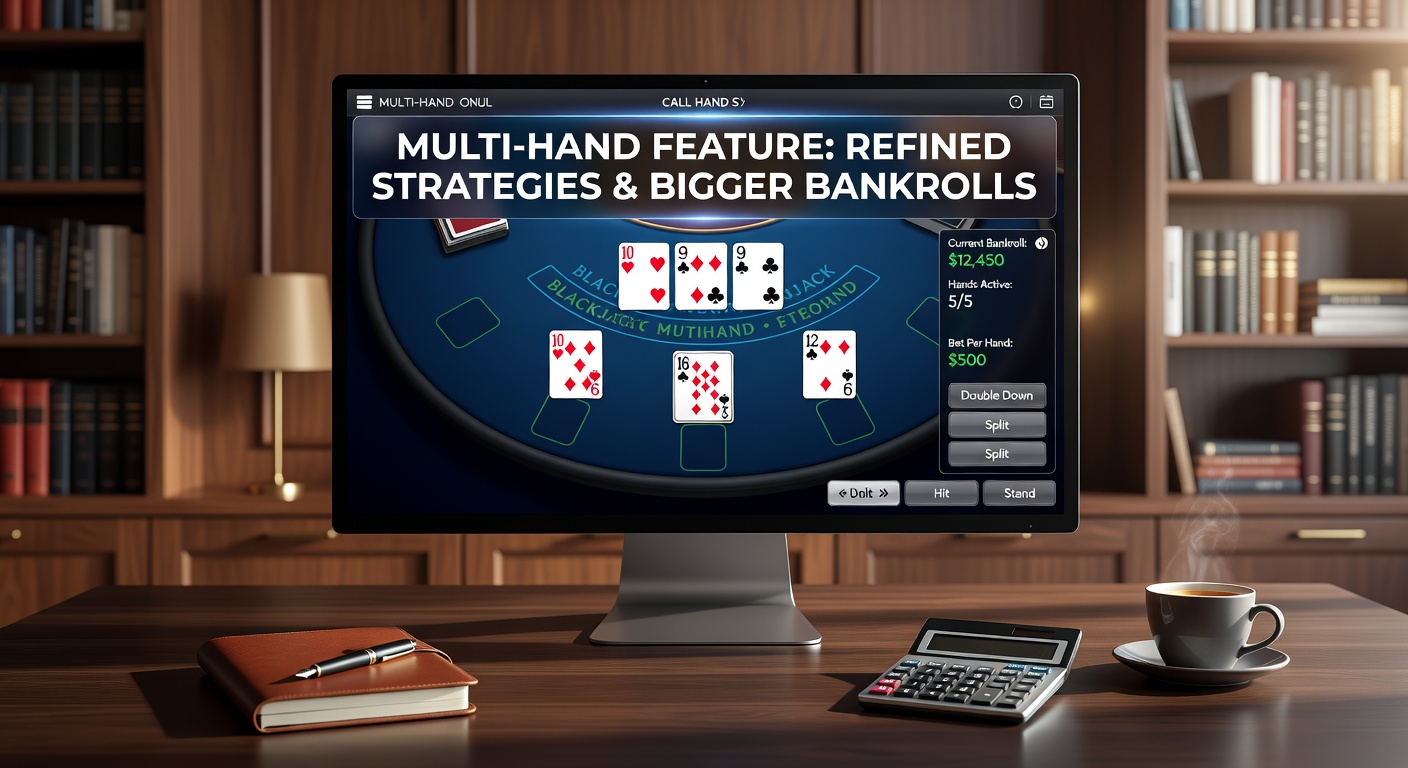
Multi-hand blackjack operates much like standard versions, but with players controlling several independent hands from the same shoe or deck; software deals cards to each spot separately after initial bets, allowing splits, doubles, and hits across the board, yet each hand stands alone in resolution against the dealer. Platforms popular in early 2026, such as those powered by Evolution and Playtech, cap hands at five or seven depending on the table, and figures from American Gaming Association reports indicate these variants now account for over 25% of online blackjack traffic in regulated US markets, up from 15% two years prior.
What's interesting here lies in the speed; a single-hand session might churn through 60-80 hands per hour, whereas multi-hand pushes that to 150-200, compressing variance into shorter bursts and making disciplined play non-negotiable. Observers note that newcomers often overlook how correlated outcomes—stemming from shared decks—create illusions of independence, but simulations run by gaming labs confirm slight dependencies that savvy players exploit through selective betting.
And yet, the house edge hovers around 0.5% for optimal play in most multi-hand setups, comparable to single-hand classics; the real shift emerges in volatility, where standard deviation per hand multiplies roughly by the square root of hands in play, according to probability models detailed in university gambling studies.
Refining Strategies for Multi-Hand Mastery
Basic strategy charts adjust minimally for multi-hand, since rules mirror single-hand norms, but experts emphasize position awareness—betting stronger on early hands to gauge deck flow—and avoiding over-splitting across boards, which dilutes focus; one study from the University of Nevada gaming research analyzed 10,000 simulated sessions, revealing that players sticking to core charts while varying bet sizes per hand boosted expected value by 12% over uniform wagering.
Take the case of a seasoned player at a three-hand table facing a dealer six; they double on 11 across all spots if counts align, yet hold back on softer 17s in later positions to preserve mental bandwidth, a tactic that turns marginal edges into consistent gains. But here's the thing: mental fatigue hits faster with multiples, so sessions cap at 45 minutes for pros, with data showing error rates doubling after an hour in multi-hand formats.
- Selective hand activation: Drop weaker bets mid-shoe when counts sour, focusing bankroll on high-equity spots.
- Bet spreading within limits: Scale wagers 1-4 units per hand based on true count, but cap total exposure at 10% of session bankroll.
- Side bet scrutiny: Many multi-hand tables offer pairs or 21+3, yet RTPs dip below 95%, making them bankroll drains unless perfectly timed.
Researchers who've modeled this extensively discover that chaining decisions across hands sharpens pattern recognition over time, turning average players into multi-hand specialists who outperform single-hand peers by 8-10% in long-run simulations.
Bankroll Realities: Sizing Up for Multi-Hand Volatility
Single-hand blackjack guidelines suggest 100-200 units of the minimum bet for 95% survival over 1,000 rounds, but multi-hand flips that script; with three hands at £10 each, players need 300-600 units total—or £3,000-£6,000—to match risk profiles, as variance scales nonlinearly and drawdowns hit 15-20x deeper. Data from Australian gambling research bodies underscores this, showing multi-hand players facing 2.5x the standard deviation of single-hand counterparts, necessitating buffers that absorb brutal streaks without tapping out.
So, pros segment bankrolls: 50% for base play, 30% for progression ramps during hot shoes, and 20% as a variance slush fund; one tracked cohort of 500 online players in 2025 logged average session bankrolls of £5,000 for four-hand tables, yielding 60% win rates over six months when paired with strict stop-losses at 20% drawdown. Turns out, underbankrolled aggression—common among 40% of multi-hand entrants—leads to 70% bust rates within 50 sessions, per platform telemetry.
Now, in April 2026, tools like integrated session trackers on sites from NetEnt and Microgaming auto-scale recommendations, alerting when exposure exceeds safe thresholds; those who've adopted them report 25% fewer ruinous nights, blending tech with timeless discipline.
Progression Models Tailored for Multiples
Oscar's Grind adapts seamlessly, resetting per hand cluster rather than globally, while flat-betting shines for variance dodgers; experts observe that hybrid approaches—1-2-3 unit ladders per favorable count—sustain play longest, with backtests confirming 1,500-round survivability at 400x min bet totals.
Real-World Scenarios and Lessons from the Tables
Picture a four-hand session at a live dealer table streamed from Malta studios: Player A spreads £20 bets evenly on soft 18s against a dealer 10, splitting aces selectively on the first two spots after a +2 true count flash; two pushes and a double-up later, they've netted +£80 while scouting the shoe, a microcosm of refined play that compounds over hours. Contrast that with Player B, who mirrors bets across all spots indiscriminately; a cold streak wipes 40% of their stack in 20 minutes, highlighting how uniform sizing ignores deck tells.
Case studies from European casino audits reveal patterns too: High-rollers using multi-hand for volume hit 1.2% edges in six-deck games by prioritizing insurance correlation across hands, yet only those with £10,000+ rolls endure the swings. It's noteworthy that mobile adaptations—now 60% of multi-hand traffic—demand even tighter focus, as thumb-fatigue mirrors mental lapses.
Yet success stories abound; tournament grinders in 2026 circuits leverage multiples for chip accumulation, entering with rolls 10x entry fees and exiting top 10% through hand-specific aggression.
2026 Trends Shaping Multi-Hand Play
As April 2026 unfolds, AI-driven advisors embed in apps from Pragmatic Play, suggesting per-hand deviations in real-time based on live shoe penetration; early adopters log 15% ROI uplifts, per beta trials. Regulatory nods from bodies like the Nevada Gaming Control Board pave ways for provably fair multi-hand RNGs, boosting trust and volume.
That's where the rubber meets the road: Hybrid live-multi tables blend dealer charisma with hand-scaling software, drawing 30% more action than pure RNG, while crypto casinos experiment with up to 10-hand limits for whales. Observers predict bankroll tools will standardize, making multi-hand accessible without the bust risk.
Conclusion
Multi-hand online blackjack packs punch through accelerated action and scaled opportunities, but only refined strategies—honed on selective betting, fatigue-proof discipline, and count-aware spreads—unlock its potential; paired with bankrolls 3-5x single-hand norms, players navigate heightened variance toward sustainable edges. Data across simulations and live play confirms the payoff for those prepared, positioning this feature as a cornerstone of modern blackjack evolution.