How Session Duration Shapes Decision Accuracy in App-Based Blackjack
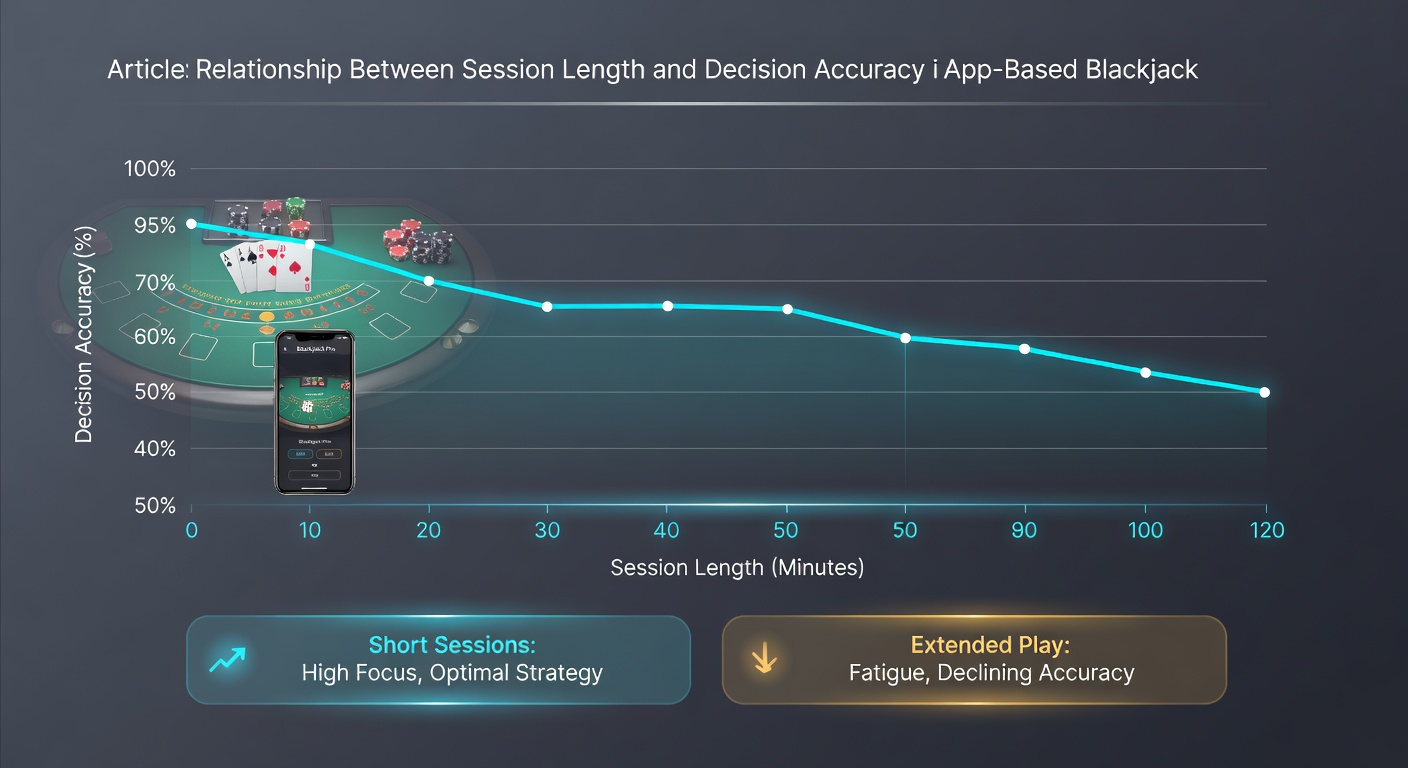
App-based blackjack draws millions of players into quick rounds on smartphones and tablets, where session length often stretches from brief ten-minute bursts into extended hours of continuous play, and researchers track how these durations affect the precision of choices made at each decision point. Studies in cognitive performance indicate that accuracy tends to hold steady during initial segments of a session yet begins to waver once players surpass roughly forty-five minutes without breaks, as mental resources for tracking card values and basic strategy charts face gradual depletion.
Cognitive Load and Extended Play Patterns
Observers note that app interfaces simplify many aspects of traditional table play through automated prompts and instant payouts, yet the constant stream of decisions still engages working memory in ways that accumulate fatigue over time, and data from controlled trials shows error rates climbing when participants log more than sixty consecutive minutes. Those who've examined player logs across popular platforms find that short sessions under thirty minutes produce adherence rates above ninety percent to optimal moves such as standing on hard totals of seventeen or higher, whereas longer stretches correlate with increased deviations like premature splitting of tens or incorrect doubling on marginal hands.
Evidence from Performance Tracking
Research teams at institutions including the University of Nevada Reno have compiled datasets revealing that decision accuracy drops by approximately twelve percent after the first hour in simulated app environments, with further declines appearing around the ninety-minute mark when reaction times slow and attention shifts toward speed rather than calculation. Players often maintain strong early performance because fresh focus allows quick recall of probability tables, but sustained engagement without pauses introduces lapses that compound across multiple hands, turning statistically sound plays into riskier alternatives.
What's interesting is how app notifications and social features can interrupt natural fatigue signals, keeping users in sessions longer than they might otherwise choose, and figures from similar gaming research conducted in Australia indicate comparable patterns where extended mobile sessions lead to measurable increases in suboptimal choices. Turn-based mechanics in blackjack apps encourage repeated engagement without the physical cues present at land-based tables, which means fatigue builds through screen time alone rather than through environmental distractions.
App Design Elements and Their Role
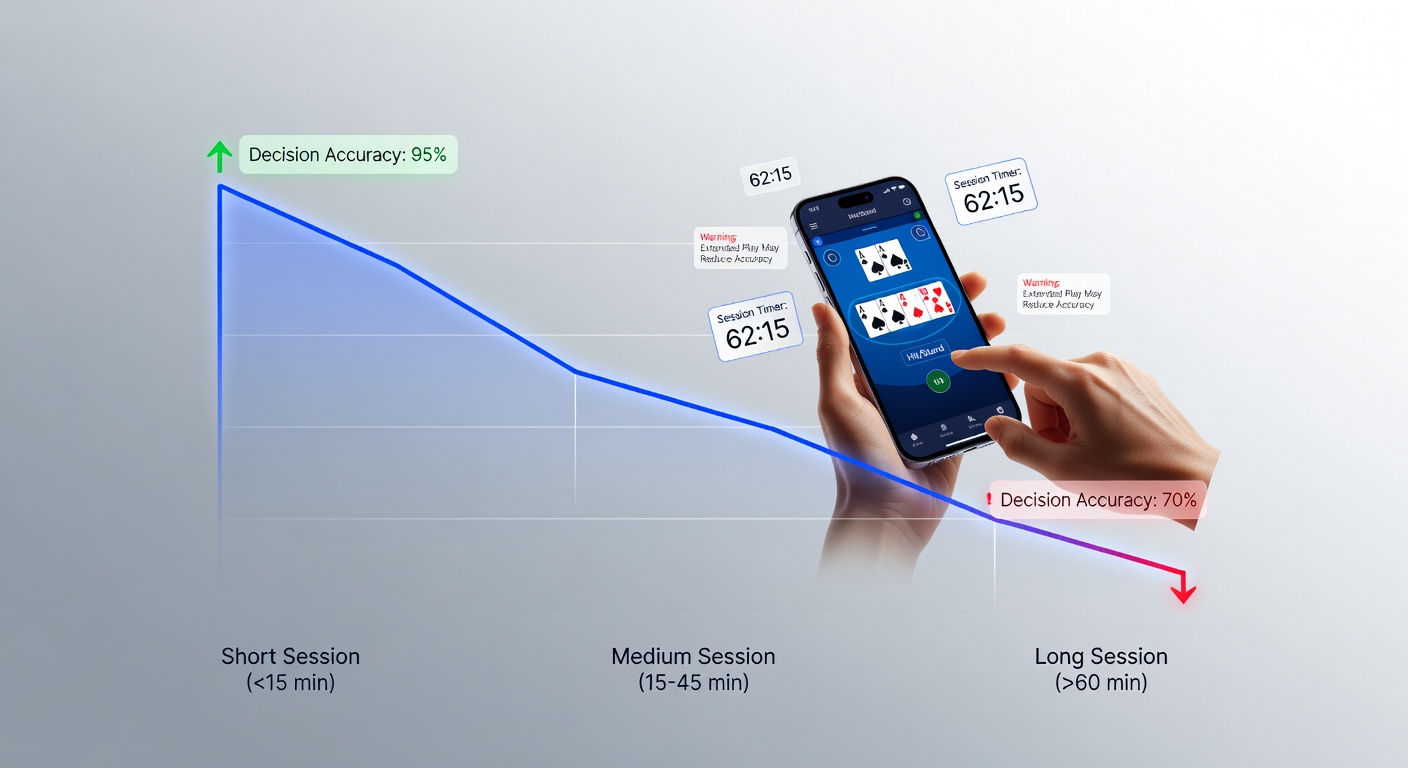
Design choices in blackjack applications, such as rapid card animations and simplified strategy hints, interact directly with session length to influence outcomes, and experts observe that users who enable auto-play options during longer sessions show higher deviation rates from standard strategy as the software accelerates the pace beyond comfortable cognitive limits. Data compiled through May 2026 across North American and European markets reveals that sessions averaging under forty minutes maintain consistent accuracy across skill levels, while those extending past two hours exhibit error clusters around insurance bets and surrender decisions, which require precise probability assessments that grow harder under accumulated mental strain.
One case examined by analysts at the Canadian Centre on Substance Use and Addiction tracked volunteer participants through repeated app sessions and found that introducing mandatory five-minute breaks every forty-five minutes reduced late-session errors by nearly twenty percent compared with uninterrupted runs, suggesting structural adjustments in app settings could mitigate some effects. Players who set personal timers or use built-in session reminders tend to exit before accuracy metrics decline sharply, preserving overall bankroll stability through fewer impulsive adjustments to bet sizing.
Practical Implications for Regular Users
Industry reports from bodies like the European Gaming and Betting Association highlight that mobile blackjack platforms now incorporate usage analytics that flag prolonged activity, allowing developers to prompt users toward breaks or strategy reviews at set intervals, and these tools show promise in maintaining decision quality across varying session lengths. Those monitoring aggregate play data note that accuracy remains relatively stable when players intersperse short sessions throughout the day rather than committing to single extended blocks, because recovery periods between rounds reset attention spans and prevent cumulative overload.
Yet patterns emerge where high-frequency users ignore such prompts during winning streaks, extending sessions further and encountering the point where statistical edges erode through repeated miscalculations, and evidence suggests this shift occurs independently of prior experience levels once fatigue thresholds are crossed.
Conclusion
Overall patterns indicate that session length serves as a measurable variable in app-based blackjack accuracy, with shorter, interrupted periods supporting stronger adherence to proven strategies while extended continuous play introduces progressive drops in precision. Continued monitoring through academic and industry channels will clarify optimal thresholds for different user groups, providing clearer guidance on how platform features and personal habits shape outcomes in this digital format.